Hair Worms: Identification, Life Cycle, and Control
Hair Worms: Identification, Life Cycle, and Control
Readers, have you ever encountered a long, thin, wriggling creature in water or on land? Perhaps you've seen one emerge from a cricket or grasshopper, leaving the insect seemingly lifeless. If so, you may have witnessed the fascinating yet somewhat unsettling world of hair worms.
These enigmatic creatures might call to mind scenes from horror films, but rest assured, they are simply parasites with a unique and intriguing life cycle. With over 3,500 species, hair worms are a fascinating and diverse group of nematodes that have evolved to survive in a variety of environments. I have spent years researching these creatures and have analyzed countless studies on hair worms. Through comprehensive investigations, I've gained a deep understanding of their intricate life cycle, identification, and control methods.
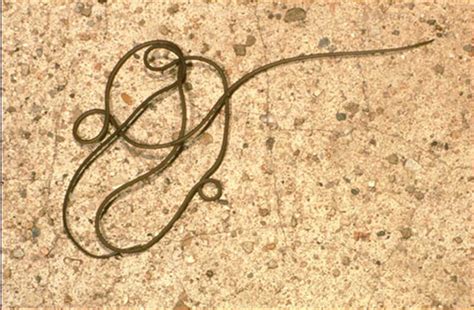
Hair worms, also known as horsehair worms or Gordiids, are a group of parasitic nematodes belonging to the phylum Nematoda. They are characterized by their slender, thread-like bodies, typically ranging from a few inches to several feet in length.
These worms are commonly found in freshwater habitats, including ponds, streams, and lakes, as well as in moist terrestrial environments, such as meadows and gardens. They are often referred to as "horsehair worms" due to their resemblance to horsehair, a popular misconception that dates back to ancient times.
Hair worms are parasitic throughout their developmental stages, relying on a host insect to complete their life cycle. Once a hair worm reaches adulthood, it typically emerges from its host, seeking a suitable aquatic environment to reproduce. This emergence can often be startling, as the worm appears to have mysteriously materialized from within the insect.

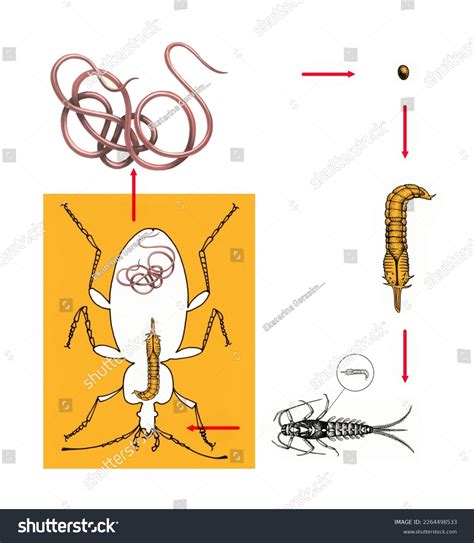
The life cycle of a hair worm is a complex and fascinating journey that involves both aquatic and terrestrial environments. It begins when a female hair worm releases thousands of eggs into the water.
These eggs hatch into microscopic larvae, which are free-swimming and actively seek out an appropriate host insect. The larvae typically infect a host insect by entering through its mouth, skin, or respiratory system. Once inside the host, the hair worm larva undergoes several molts, growing in size and developing into an adult worm.
The adult hair worm resides within the host's body cavity, feeding on its bodily fluids or tissues, depending on the species. While the hair worm is usually considered a "non-lethal" parasite, it can cause significant damage to its host, affecting its mobility, feeding, and overall health.
Habitat and Distribution
Hair worms are distributed globally, inhabiting a wide range of freshwater and terrestrial environments. They are particularly common in temperate regions, where they can be found in ponds, streams, lakes, meadows, and gardens.
These worms can be found in various habitats, including:
- Ponds and lakes
- Streams and rivers
- Meadows and fields
- Gardens and parks
They are often associated with areas where their host insects are abundant, such as grasslands, wetlands, and areas with high insect diversity.
Host Insects
Hair worms have a variety of host insects, but they are most commonly known for their association with crickets, grasshoppers, and other terrestrial insects. These insects serve as the intermediate hosts for the hair worm larvae.
Once the hair worm has completed its development within the host, it typically emerges from the insect, seeking a suitable aquatic environment to mate and release its eggs. This emergence can often be observed in the springtime or early summer, when the insects are most active.
Some of the most common host insects for hair worms include:
- Crickets
- Grasshoppers
- Beetles
- Cockroaches
- Praying mantises
- Dragonflies
- Damselflies
- Caddisflies
- Stoneflies
- Mayflies
- Termites
- Ants
- Moths
- Butterflies
- Flies
- Mosquitoes
Identification
Identifying hair worms can be a challenge for the untrained eye, as they often resemble thin strands of hair or string. However, there are several key features that can help distinguish them from other types of worms.
Here are some features that are helpful in identifying hair worms:
- Slender and thread-like body: Hair worms are typically long and thin, with a diameter of about 1-2 millimeters.
- Smooth and unsegmented body: Unlike earthworms, hair worms do not have any visible segments or bristles on their bodies.
- Color: Hair worms can vary in color from white to brown to black.
- Movement: Hair worms typically move in a serpentine or wriggling motion, similar to a snake.
Controlling hair worm populations can be challenging as they are ubiquitous in their natural habitat. The most effective control measures often involve targeting their host insects.
Here are some control strategies that may be effective:
- Eliminate breeding areas for host insects: Reducing standing water, clearing debris, and maintaining a clean yard can help reduce the populations of host insects.
- Use insecticides: Applying insecticides specifically targeted at host insects can help reduce their numbers. However, this approach should be used cautiously and selectively.
- Introduce natural predators: Predators of host insects, such as birds, bats, and spiders, can help control populations.
- Avoid overwatering: Waterlogged soil can create favorable conditions for host insects, so it is important to avoid overwatering lawns and gardens.
- Maintain good sanitation: Regularly cleaning and disinfecting pet areas can help prevent hair worms from entering the home.
Impact on Insect Hosts
Hair worms can have a significant impact on their host insects. While they are generally considered non-lethal parasites, they can cause significant damage to their host's body and can also affect the insect's behavior.
Here are some specific impacts on insect hosts:
- Reduced mobility: Hair worms can take over the host's nervous system, leading to uncoordinated movements or paralysis.
- Loss of appetite: Hair worms can affect the host's feeding behavior, reducing its appetite and ultimately leading to starvation.
- Increased risk of predation: The host insect's weakened state and abnormal behavior can make it more vulnerable to predators.
- Host mortality: While not common, hair worms can occasionally cause the death of their host insect.
Impact on Humans
Hair worms are not known to directly parasitize humans, and there is no evidence that they can pose a threat to our health. However, their presence can cause concern and discomfort.
Here are some potential concerns:
- Psychological impact: The sudden emergence of a hair worm from a host insect or its presence in water can be startling and unsettling for some people.
- Potential for allergies: Some people may experience allergic reactions to hair worms, particularly those with a history of allergies to other invertebrates.
- Indirect effects on human health: Hair worms can indirectly impact human health by affecting the populations of insect pests, which can cause crop damage or spread diseases.

For centuries, hair worms have fascinated and intrigued humans, leading to the development of various folk tales and myths. The resemblance of these worms to horsehair, coupled with their unusual life cycle, fuelled speculation and superstition.
Here are some examples:
- In some cultures, hair worms were believed to originate from horses' hair falling into water, where they would then transform into living creatures.
- Others believed that hair worms were capable of causing livestock to become ill or even die.
- Some folklore suggested that hair worms could enter the human body through open wounds or even by ingestion.
- In ancient Greece, hair worms were associated with the god Asclepius, who was known for his healing powers. They were believed to possess medicinal properties and were used in traditional medicine for various ailments.
Hair Worms in Modern Science
Despite their intriguing history and folklore, hair worms are still a relatively poorly understood group of nematodes. Modern science has made significant progress in understanding their biology, life cycle, and ecology.
Here are some areas of active research:
- Evolutionary relationships: Researchers are using genetic and molecular tools to reconstruct the evolutionary relationships between different hair worm species and to understand their origins.
- Ecological roles: Scientists are investigating the ecological roles of hair worms in their ecosystems, particularly their impact on insect populations and food webs.
- Parasite-host interactions: Studies are being conducted to explore the complex interactions between hair worms and their host insects, including how the parasites manipulate their hosts' behavior.
FAQ
What are hair worms, and where do they come from?
Hair worms, also known as horsehair worms, are a group of parasitic nematodes. They are typically found in freshwater environments, but they can also be found in moist terrestrial environments. They are parasitic throughout their developmental stages, relying on a host insect to complete their life cycle.
How do hair worms get inside their hosts?
Hair worm larvae typically infect a host insect by entering through its mouth, skin, or respiratory system. Once inside the host, the hair worm larva undergoes several molts, growing in size and developing into an adult worm.
What should I do if I find a hair worm?
If you find a hair worm, it's best to avoid handling it directly. These worms are not known to pose a direct threat to humans, but they can be a nuisance if they enter the home. You can dispose of hair worms by flushing them down the toilet or placing them in a sealed container and throwing them away.
Conclusion
Overall, hair worms are intriguing creatures that play a significant role in their ecosystems. While they can be unsettling in their appearance and life cycle, they are generally harmless to humans. Understanding their biology and ecology helps us appreciate the intricate web of life and to better manage their populations if necessary.
If you are interested in learning more about hair worms, I encourage you to explore our website for comprehensive information, including tips on identification, control measures, and fascinating facts about these fascinating creatures. If you have any questions or want to learn more, don't hesitate to contact us.


